You have a few thousand dollars to promote your business.
You could run ads. Hire a publicist. Purchase a sponsored article. Create videos.
Every option has a pitch. Every proposal looks promising. And somehow, everyone has a chart.
Where should your money go?
Start with the job you need that investment to do.
Do you need inquiries for a specific service? Independent press coverage? Content for your marketing? A way for potential clients to understand why they should choose you?
Those are different goals. Knowing yours makes the comparison much more useful.
What are you actually buying?
Here’s a practical look at four options. All dollar amounts below are illustrative budgets, rather than market averages or vendor quotes.
| Investment | Illustrative cost | What it can provide | What to examine |
|---|---|---|---|
| Self-managed digital ads | $50/day for 30 days = $1,500, before creative costs | Targeted distribution, offer testing, and measurable responses | Creative, targeting, landing page, follow-up, and cost per qualified inquiry |
| Sponsored publication article | $1,500 for a hypothetical placement | A written introduction within a publication’s environment | Audience fit, promotion included, sponsorship disclosure, and reuse rights |
| PR agency outreach | $3,000/month for three months = $9,000 | Story development, pitching, and media relations, depending on scope | Paying for outreach is different from purchasing a particular placement |
| Produced interview or show feature | $3,500 for an illustrative package | Preparation, hosted production, an on-camera feature, and finished media assets | Audience and distribution evidence, deliverables, usage rights, and how you’ll use the content |
Each purchase serves a different job.
An effective ad campaign may be the right choice for generating inquiries now. A publicist may help you pursue independent editorial attention. A sponsored article may introduce your business to a relevant readership.
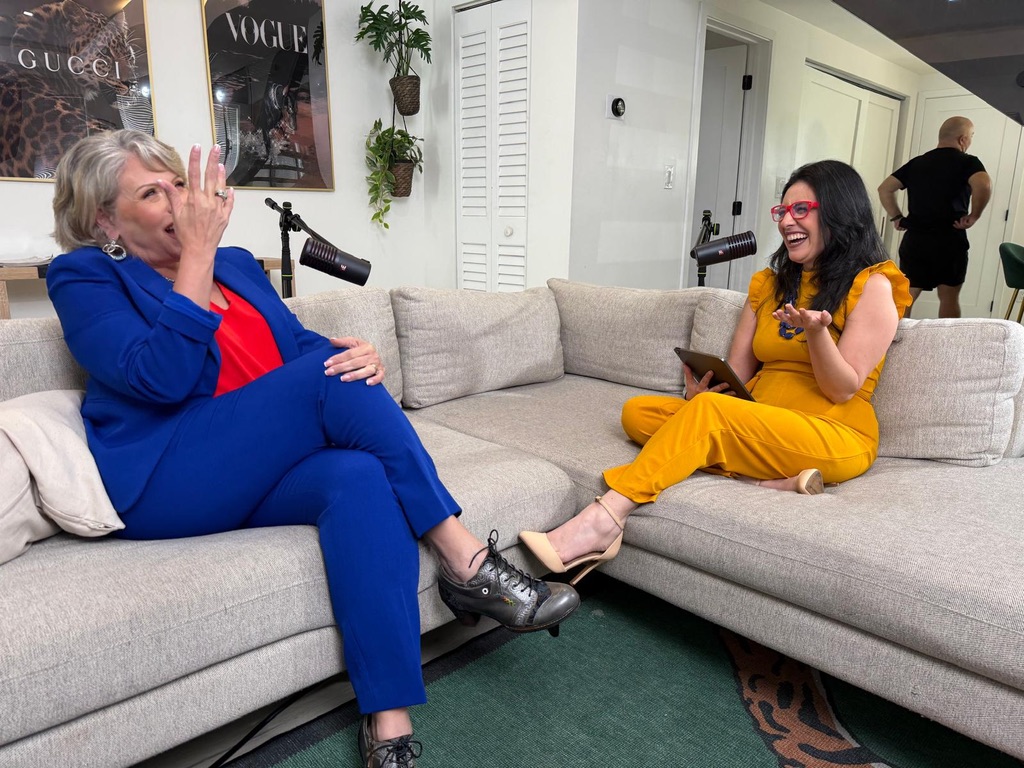
A produced show offers another kind of value: an opportunity for people to experience how you think, paired with content you can use afterward.
Give people something specific to remember
Imagine a contractor answering this question on camera:
“The homeowner wants the cheaper shortcut. You know it could create problems later. What do you tell them?”
Their answer could reveal their judgment, standards, and approach to difficult client conversations.
A homeowner watching might think, “That’s the kind of person I’d want working on my house.”
Now there’s something specific behind the business name: an actual human being explaining what matters to them and why.
The same opportunity exists when a designer explains a budget tradeoff, an inspector spots an overlooked concern, or a mortgage professional makes a confusing decision understandable.
The audience gets to see the expertise in action.
That can give a referral more substance, a website introduction more personality, and a prospective client a useful starting point for a conversation.
Entertainment gives expertise an inviting doorway
I love a home transformation show.
The decisions. The reveal. The moment someone opens a wall and everyone suddenly gets very quiet.
I have opinions. From my sofa. Where my imaginary renovation budget is exceptionally generous.
But while I’m enjoying the show, I’m also watching how people solve problems, explain choices, and handle surprises.
That’s what interests me about edutainment: creating something people enjoy watching while giving them something useful to take away.
We can see the possibilities in established examples.
- Keith Lee and the Puddery After food reviewer Keith Lee featured the Puddery, Eater reported a surge in business. His video introduced viewers to a business they might otherwise never have discovered. Lee has also explained his decision not to charge restaurants for reviews, so this was independent coverage—not a purchased appearance.
- Cheap Old Houses Elizabeth and Ethan Finkelstein’s Cheap Old Houses grew from a focused Instagram concept into an HGTV series, as Deadline reported when the series was announced. Their particular interest gave an audience something recognizable to gather around.
These examples illustrate discovery and audience-building, rather than expected results from buying a feature.
The useful lesson for a business owner is that expertise, personality, and an engaging format can give people a reason to pay attention.
You don’t have to become famous for the right people to remember you.
Why a show—and why a defined audience?
A show gives ideas a recurring home. A clearly defined audience gives every question, guest, and creative choice a reason.
A conversation for homeowners asks different questions from one created for health professionals, business leaders, or women navigating midlife. That specificity helps the audience recognize that the conversation was created with their real lives in mind.
Format matters, too. Two experts may approach the same dilemma differently. Games and unexpected questions create room to explain, react, disagree, and reveal how people think.
The strongest concepts bring audience, purpose, format, and distribution together. Each part has a job.
What should remain after the promotion ends
A thoughtful media investment can keep creating value long after the initial attention passes.
Ideally, it creates something a business can continue to use: a clear explanation, a useful story, a moment of trust, or a piece of content that answers a real question.
Produced media is a different tool from advertising, publicity, or a sponsored article. Each serves a different purpose.
Its value depends on the quality of the conversation, the relevance of the audience, and whether the finished material has somewhere useful to go.
Before investing in any produced feature, ask:
- What exactly will be created?
- Who is it intended to reach?
- What will I own or be allowed to use?
- How will it be distributed?
- How can the finished material support the rest of my marketing?
- Will it still be useful after the initial promotion ends?
The real question is: What will still have value when the promotion is over?
Media is also memory
A conversation created today may begin as content for this month. With time, it becomes a record.
It preserves how you sounded, what you believed, what mattered to you, and how you understood the world at that moment.
For a business or organization, that record becomes a visible history of its ideas, values, and evolution. For families, communities, and future generations, it can become part of a legacy.
As AI becomes a larger part of what we read and watch, genuinely human records may become even more valuable: real voices, expressions, laughter, pauses, conviction, imperfection, and lived experience.
The media we create now becomes part of the digital track record we leave behind.
The conversation I want to keep having
I believe media can help people understand someone’s expertise before they ever need to buy from them.
It can make complicated ideas feel human. It can help trustworthy voices become easier to find. And when it is created thoughtfully, it can give people something useful while preserving the voice and perspective behind the work.
That is the mission behind Diana Castro Media: creating conversations that are relevant, engaging, human, and worth remembering.
So before making your next marketing investment, ask:
What will this create? Who is it for? How will it reach them? What will remain afterward?
And perhaps one more question:
What part of your work, voice, or story would you want someone to find ten years from now?